
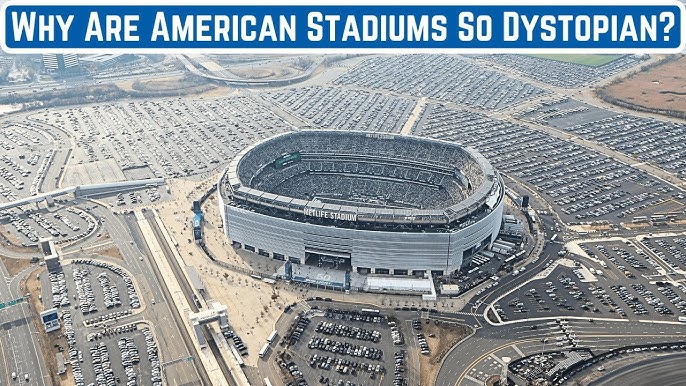
When American Stadiums Become World Cup Venues: More Than Just Changing the Lines
Transforming American stadiums into football venues involves more than repainting markings—it alters how matches unfold in subtle but important ways. For viewers watching full games, these changes influence spacing, tempo, and even decision-making under pressure. Recognizing how stadium adaptation affects play helps explain variations in match flow during major tournaments.
Why Pitch Dimensions Change Tactical Behavior
Many American stadiums are originally designed for sports with different field proportions, leading to slight adjustments in pitch dimensions during conversion. Even small differences in width or length can reshape how teams attack and defend.
A narrower pitch compresses play centrally, forcing teams to rely on quick combinations rather than wide progression. Conversely, a wider surface stretches defensive lines, creating more one-on-one situations. Viewers should pay attention to how often teams switch play or attempt wide overloads, as this reveals how they are adapting to spatial constraints.
How Surface Quality Influences Tempo
Temporary grass installations can behave differently from permanent football pitches, affecting ball speed and player footing. These variations influence passing accuracy and pressing intensity.
Slower surfaces tend to reduce the effectiveness of quick passing sequences, encouraging longer touches and more cautious build-up. Faster surfaces, on the other hand, reward first-time passing and rapid transitions. When watching, observe how often players adjust their first touch—this small detail often signals how comfortable they are with the surface.
What Stadium Design Does to Crowd Impact
Large, multi-purpose stadiums distribute crowd noise differently compared to ลิ้งค์ดูบอลสด โกลแดดดี้-specific venues. This changes how players perceive pressure and momentum.
In some cases, sound disperses more widely, reducing the immediate intensity felt on the pitch. This can lead to more controlled, less frantic opening phases. Viewers should notice whether early pressing feels coordinated or hesitant, as crowd proximity often influences emotional tempo.
Key Visual Cues to Track During Matches
Understanding stadium influence requires focusing on recurring visual patterns that indicate how teams are adjusting. These cues often appear early and shape the rest of the match.
- Frequency of wide switches versus central combinations.
- Speed of ball circulation across defensive lines.
- Player spacing during build-up phases.
- Number of successful first touches under pressure.
- Defensive line height relative to midfield positioning.
These indicators help viewers interpret whether the environment is encouraging expansive or compact play. For example, fewer wide switches may suggest limited usable width, while slower circulation often points to surface-related adjustments.
Tracking these details allows viewers to connect environmental factors with tactical outcomes. Matches that seem unusually slow or congested often reflect stadium constraints rather than purely strategic choices.
Comparing Standard vs Converted Venues
A direct comparison between traditional football stadiums and converted American venues highlights structural differences that influence gameplay.
| Aspect | Football-Specific Stadium | Converted American Stadium |
| Pitch consistency | Stable and uniform | Variable depending on installation |
| Width perception | Optimized for wide play | Sometimes visually compressed |
| Crowd proximity | Close to pitch | Often more distant |
| Surface familiarity | High for players | Requires adaptation |
These contrasts explain why some matches feel less fluid despite high-quality teams. The environment subtly shapes decision-making and execution.
For viewers, recognizing these differences prevents misjudging team performance. A slower or less precise match may reflect adaptation challenges rather than tactical inefficiency.
Where Adaptation Challenges Become Visible
Teams that rely heavily on positional play often struggle more in converted venues. Their systems depend on precise spacing and predictable ball movement, both of which can be disrupted by unfamiliar conditions.
This becomes clear when passing sequences break down in advanced areas. Viewers should watch for hesitation before key passes or reduced movement off the ball—these signs indicate uncertainty caused by environmental factors.
How Live Viewing Reveals Environmental Effects
Watching matches unfold in real time through ดูบอลสด makes it easier to detect how stadium conditions shape gameplay. The pacing of passes, the consistency of ball movement, and the spacing between players become clearer when observed continuously rather than through edited highlights. These details are essential for understanding how teams adapt their tactics across different venues. By following the full match, viewers can identify whether changes in tempo or structure are driven by strategy or by the physical characteristics of the stadium itself.
What This Means for Tactical Preparation
Teams entering tournaments in converted venues must prepare for variability rather than consistency. Training sessions often simulate different pitch speeds and dimensions to reduce adaptation time.
For viewers, this preparation becomes visible in how quickly teams settle into their rhythm. Matches where players adjust within the first 15 minutes tend to show cleaner execution, while prolonged adaptation leads to inconsistent performance.
How Early Adjustments Predict Match Flow
Early adaptation often determines whether a team can impose its style. Quick adjustments lead to controlled possession and structured attacks, while slow adaptation results in fragmented play.
This pattern explains why some matches shift dramatically after the opening phase. Viewers should focus on how teams respond to initial conditions rather than just the scoreline.
Summary
Converting American stadiums for the World Cup affects pitch dimensions, surface behavior, and crowd dynamics, all of which influence how matches are played. By tracking spacing, tempo, and early adjustments, viewers can better interpret performance variations. Watching these elements in real time reveals how environmental factors shape both tactics and outcomes.