Live Baccarat for Malaysian Players: How the Most Popular Asian Casino Game Really Works
Walk into any physical casino in Macau, Genting, or Manila during peak hours. The baccarat tables are full. The blackjack and roulette tables have room. This isn’t an accident. Baccarat has been the dominant casino game across Asian markets for generations, and the preference has carried straight into online live casino. On most Malaysian platforms, baccarat tables generate more activity than every other live game category combined.
New players sometimes find baccarat intimidating from a distance. The squeeze, the patterns being drawn, the regulars muttering at the screen. It looks complicated. It isn’t. Baccarat is one of the simplest table games once you understand the three bets and how they pay. This piece covers what really happens at the table and how new Malaysian players can approach the game without immediately losing their bankroll.
The Three Bets, And That’s Pretty Much It
Baccarat has three main bets: Banker, Player, and Tie. That’s the core of the game. Some tables add side bets like Pair, Lucky 6, or Dragon Bonus, but those are extras. The main game runs entirely on the three core options.
Banker and Player don’t refer to you versus the house. They’re just labels for two hands. You’re not picking your team. You’re betting which of the two hands ends up closer to a total of nine. The dealer handles both hands. The cards are drawn according to fixed rules. There are no choices to make once the bet is placed.
How the Hand Plays Out
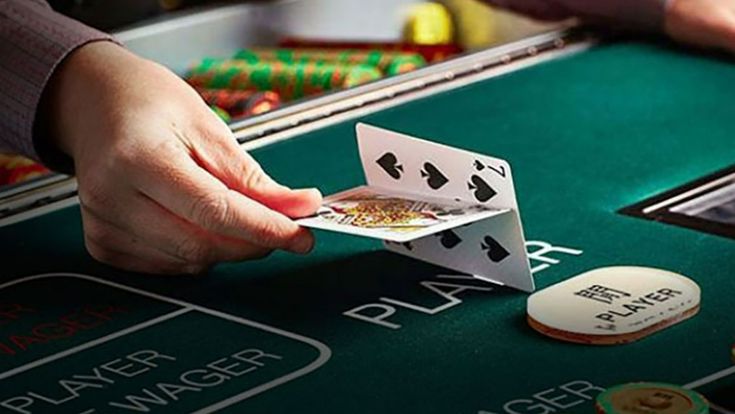
Two cards get dealt to each side. Each hand’s value is the last digit of the total (a 7 and an 8 makes 15, which counts as 5). If either hand has 8 or 9 on the first two cards, that’s a “natural” and the hand ends immediately. Otherwise, fixed rules determine whether a third card gets drawn for each side. The hand closer to 9 wins. Whoever bet on that side wins their bet.
House Edge for Each Bet
Here’s where new players make their most expensive mistake. The three bets don’t have equal house edge.
Banker has the lowest house edge at around 1.06 percent. It wins slightly more often than Player because of the third-card rules. To compensate, winning Banker bets pay 0.95 to 1 instead of 1 to 1 (the 5 percent commission). Even with the commission, Banker is the strongest of the three bets statistically.
Player has a house edge of around 1.24 percent. It wins slightly less often than Banker but pays 1 to 1 without commission. The math is close to Banker. Pick either one and you’re playing a roughly fair game by casino standards.
Tie has a house edge of around 14.4 percent. This is enormous. The 8 to 1 payout on a winning Tie bet looks attractive but doesn’t come close to compensating for how rarely the bet wins. Regular players don’t bet Tie. Players who do bet Tie burn through bankroll fast and rarely understand why.
Why the Tie Bet Trap Is So Common
The Tie bet draws new players because the payout looks bigger than the other two. 8 to 1 sounds better than 1 to 1. But baccarat is one of the games where the displayed payout most misrepresents the actual value. A bet that wins 9.5 percent of the time at 8 to 1 has a real long-term return that’s significantly worse than a bet that wins 49 percent of the time at 1 to 1. The casinos know this. The Tie bet exists because some players keep taking it.
Patterns, Roads, and the Question of Streaks
Asian baccarat tables, including the ones you’ll find on Heng Ong Bet and most regional platforms, display pattern boards next to the game. These boards (called the Big Road, Big Eye Road, Small Road, and Cockroach Road) track results visually. Red circles mark Banker wins. Blue circles mark Player wins. Green markers indicate Ties. Players use the patterns to spot streaks, alternations, and other visual rhythms in recent results.
Here’s the part regulars debate endlessly: do the patterns mean anything? Strictly speaking, each hand is statistically independent of the last. The cards from the previous hand don’t affect the next one (within a single shoe, the count changes slightly, but the effect is small). The patterns are real records of past results, but they don’t predict the next outcome.
That said, plenty of experienced players treat the patterns as part of the game. Even if the patterns don’t predict, watching them adds engagement and gives a structure to decision-making. As long as players treat pattern-spotting as part of the entertainment rather than as a winning system, it’s a reasonable habit.
Pattern Betting as Stake Management
Some players use the patterns less for prediction and more for stake adjustment. They reduce stakes during chaotic patterns and slightly increase stakes during clear streaks they want to ride. The probability of any single hand doesn’t change, but this approach can extend the session and reduce variance. It’s not a system. It’s more like a rhythm management tool.
Stake Sizing and Session Length
Baccarat tables on Malaysian platforms typically have minimum bets ranging from RM5 to RM50 depending on the table. Higher-stakes VIP tables go up significantly from there. New players should start at the lowest minimums until they’re comfortable with the pace and confident about their stake management.
Each hand takes around 60 seconds at most live tables. Faster speed-baccarat variants run in 30 seconds or less. This means a one-hour session at a standard table covers around 60 hands. At a RM10 minimum bet, that’s RM600 of total stake even if every bet is at the minimum. The hands add up faster than new players expect.
Squeeze Baccarat and Speed Baccarat
Different table variants exist. Standard live baccarat runs at normal speed with the dealer dealing physical cards. Speed baccarat removes the slower elements to fit more hands per hour, which suits players who want higher action volume. Squeeze baccarat goes the other direction: the dealer reveals cards slowly, sometimes with an extended squeeze where the card’s identity becomes clear bit by bit. This appeals to players who enjoy the ritual.
Platforms with multiple live casino providers, including HengOngBet, typically offer several baccarat variants across different studios. Evolution, Sexy Gaming, Playtech, and Hotroad each have their own table styles and dealer presentations. Trying a few variants helps players find the format that suits their pacing preference, which makes a real difference to session enjoyment over time.
What to Avoid as a New Baccarat Player
Avoid the Tie bet. The math is unforgiving. Avoid the Martingale doubling system that some players still try. The minimum and maximum bet structure at baccarat tables makes Martingale eventually impossible, and you’ll wipe out a bankroll faster than the math would suggest. Avoid increasing stakes after losses. The next hand doesn’t know you lost the last one.
Most importantly, avoid treating baccarat as something you can outsmart. The game is mostly luck within tight statistical bounds. Players who accept this enjoy baccarat as entertainment with a predictable cost. Players who keep trying to crack a system end up disappointed and out of money.
Closing
Baccarat is the most popular live casino game in Asia for good reasons. It’s simple to play, has decent house odds on the main bets, and creates the kind of social rhythm that fits how many regional players approach casino games. New Malaysian players who stick to Banker or Player bets, manage their stakes sensibly, and treat the patterns as entertainment rather than predictive tools tend to enjoy the game for years. The basics matter more than any system. Once the basics are in place, the rest of the game runs on its own.