Why Cardamom Capsules Don’t Taste Like Chai
Why Cardamom Capsules Don’t Taste Like Chai is a common product-experience question. Many people first know cardamom through masala chai, coffee, desserts, rice pudding, spice blends, and warm baked foods. Then they open a bottle of capsules and expect the same sweet, bright, cozy aroma. The experience is different because a capsule is not brewed, toasted, sweetened, mixed with milk, or used like a kitchen spice.
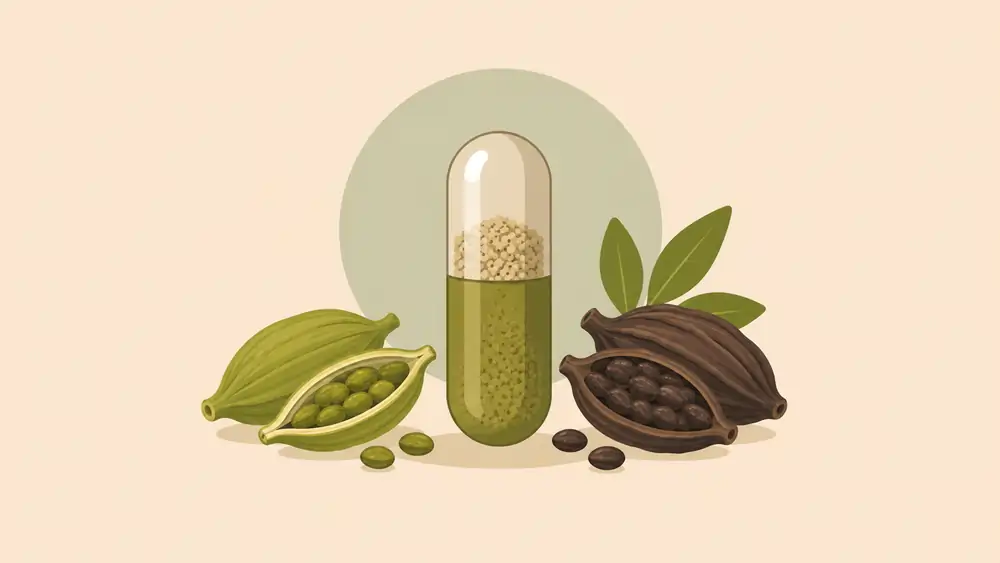
Cardamom capsules are usually designed to be swallowed, not tasted like tea. The spice may be inside a capsule shell, mixed with excipients, ground into powder, or prepared as an extract. That format limits the immediate aroma and changes how the product feels. Secrets Of The Tribe treats this as flavor-expectation literacy: a capsule can contain real cardamom material without delivering the sensory experience of chai.
This article does not provide medical advice. Cardamom capsules, extracts, powders, teas, tinctures, and supplements are not intended to diagnose, treat, cure, or prevent digestive issues, metabolic conditions, inflammation, infections, respiratory conditions, blood sugar problems, or any disease. If you are pregnant or breastfeeding, under 18, taking medication, preparing for surgery, managing a health condition, or unsure whether cardamom supplements are appropriate for you, ask a qualified healthcare professional before use.
Why Don’t Cardamom Capsules Taste Like Chai?
Cardamom capsules do not taste like chai because chai is a prepared drink, while capsules are a supplement format.
Chai builds flavor through heat, water, milk, tea, sugar, spices, and time. Cardamom capsules usually keep the spice powder or extract inside a shell until swallowed. The tongue and nose do not experience the spice the same way.
Same spice family, different sensory format.
What Makes Chai Taste Like Chai?
Chai flavor does not come from cardamom alone.
Masala chai often combines black tea, milk, sweetener, ginger, cinnamon, cloves, black pepper, cardamom, and sometimes fennel, star anise, or nutmeg. Heat pulls aroma from the spices. Milk softens harsh edges. Sugar rounds the bitterness. Tea adds tannins and depth.
A capsule has none of that preparation context.
Chai vs Cardamom Capsules
| Feature | Chai | Cardamom Capsules |
|---|---|---|
| Format | Brewed drink | Swallowed supplement |
| Flavor release | Released through heat and liquid | Mostly contained inside capsule shell |
| Other ingredients | Tea, milk, sugar, spices | Cardamom powder or extract, capsule material, other ingredients |
| Sensory expectation | Warm, sweet, aromatic, creamy | Mild aroma from bottle, little taste if swallowed whole |
| Main mistake | Expecting a drink experience | Judging capsules like a cup of chai |
Why Capsule Shells Reduce Flavor
Capsule shells create a barrier between the powder and the mouth. That is the point of the format.
If you swallow a capsule whole, the spice does not sit on the tongue the way ground cardamom does in a drink or dessert. You may smell a faint aroma from the bottle, but the capsule is not designed for full flavor release in the mouth.
A muted taste does not automatically mean weak or fake.
Why Aroma Is Stronger in Chai Than in Capsules
Cardamom aroma depends on volatile compounds. These aroma compounds are easier to notice when the spice is crushed, heated, steeped, or mixed into warm liquid.
Chai does all of those things. Capsules usually do not. A closed capsule limits aroma exposure.
That is why a spice can smell intense in tea but feel quiet in capsule form.
Why Heat Changes the Experience
Heat helps release aroma from spices. It also carries smell upward with steam, so the nose detects more of the flavor.
When cardamom is brewed in chai, the warm liquid becomes part of the sensory experience. When cardamom is inside a capsule, there is no steam, simmering, or aromatic kitchen moment.
Capsules remove the cooking step.
Why Milk and Sugar Matter
Many people think they love cardamom alone, but they may actually love cardamom in a sweet creamy context.
Milk softens sharp spice notes. Sugar highlights sweetness. Tea adds structure. Ginger and cinnamon add warmth. Cardamom becomes part of a balanced drink.
A capsule does not include that flavor system unless the label says it contains added ingredients.
Why Cardamom Type Changes the Expectation
Green cardamom and black cardamom do not smell the same.
Green cardamom is usually sweet, bright, citrusy, floral, and slightly minty. Black cardamom is usually smoky, earthy, savory, woody, and camphor-like. If a capsule label says only “cardamom,” the buyer may not know which spice type is inside.
That can make the product feel different from chai, especially if the buyer expected green cardamom.
Green Cardamom vs Black Cardamom in Capsules
| Spice Type | Typical Aroma | Why It May Not Feel Like Chai |
|---|---|---|
| Green cardamom | Bright, sweet, citrusy, floral, minty | Capsule format hides much of the aroma |
| Black cardamom | Smoky, earthy, woody, savory, resinous | Flavor profile differs from common chai expectation |
| Cardamom extract | Depends on plant part and extraction method | May not smell like whole spice |
| Cardamom seed powder | Can be aromatic if fresh | Capsule shell limits direct taste |
| Cardamom blend | Depends on other ingredients | May not match chai spices or proportions |
Why Botanical Name Matters
The botanical name tells you which cardamom plant is used.
Green cardamom usually appears as Elettaria cardamomum. Black cardamom often appears as Amomum subulatum or another Amomum species. If the label uses only the word cardamom, the ingredient identity is less clear.
For a buyer expecting chai-like aroma, species matters.
Why Plant Part Matters
Cardamom products may use seed, pod, fruit, powder, whole spice, or extract. These are not identical.
In culinary use, people often crack pods or grind seeds to release aroma. In capsules, the plant material is already processed and enclosed. If the label does not identify the plant part, it becomes harder to compare products.
Plant part affects aroma expectation and product clarity.
Why Freshly Crushed Cardamom Smells Stronger
Freshly crushed cardamom smells stronger because breaking the pod or seed exposes aromatic compounds to air.
In chai, crushed cardamom meets hot liquid. That gives a quick aroma burst. In a capsule, the powder is sealed away and may not release scent until the capsule opens later.
The difference is format, not necessarily ingredient absence.
Why Capsules May Smell Mild When You Open the Bottle
A cardamom capsule bottle may smell lightly spicy, warm, green, sweet, earthy, or almost neutral. That range can be normal.
Capsule material, bottle size, powder freshness, spice type, extract type, and storage all affect the smell. Some capsules hold aroma tightly. Others let more scent escape.
A mild bottle smell does not automatically mean poor quality.
When Smell or Taste Is a Warning Sign
Cardamom capsules should not smell moldy, rancid, rotten, chemical, or damp.
Do not use capsules if you see mold, leaking capsules, moisture inside the bottle, clumping with bad odor, broken seals, damaged capsules, or an expired product. Spice aroma can vary, but spoilage signs should not be ignored.
Do not taste-test a suspicious product.
Why “Chai Flavor” Is Not the Same as Cardamom
Chai flavor is a blend experience. Cardamom may be a key note, but it is not the whole profile.
A product can contain cardamom without tasting like chai. To taste like chai, it would need the right spice mix, sweetness, warmth, and preparation method.
Cardamom capsules are usually not designed as chai-flavored products.
Why Coffee and Desserts Create a Different Memory
Cardamom in coffee, cookies, cakes, rice pudding, and desserts often appears with sugar, fat, heat, and other aromas.
Those ingredients make cardamom feel rounder and warmer. A capsule removes sweetness, texture, and food context.
If your memory of cardamom comes from dessert, a capsule may feel flat by comparison.
Why Capsule Form Can Be Useful Without Tasting Like Food
Capsules are made for convenience, not culinary pleasure. They reduce mess, hide strong taste, and create a simple serving format.
That practical design also removes the sensory charm of cardamom in chai. The same feature that makes capsules easy to swallow makes them less aromatic in the mouth.
Convenience and flavor are different goals.
Why You Should Not Open Capsules for Flavor Experiments
Do not open cardamom capsules unless the label or a qualified professional says that use is appropriate.
Capsules may contain extract, powder, excipients, or blends that are meant to be taken as directed. Opening capsules to make tea, coffee, or desserts can change taste, serving, and handling in ways the label did not intend.
Follow the product directions.
Why Supplement Labels Matter More Than Flavor Memory
A buyer may expect cardamom capsules to match chai because that is their strongest sensory memory. Labels matter more than memory.
Read the Supplement Facts panel, botanical name, plant part, serving size, other ingredients, suggested use, warnings, storage directions, lot number, and expiration date.
Secrets Of The Tribe takes a cautious editorial stance here: a supplement should be judged by label clarity and product integrity, not by whether it recreates a café drink.
What to Check Before Buying Cardamom Capsules
Check whether the label says green cardamom, black cardamom, Elettaria cardamomum, Amomum subulatum, seed powder, fruit powder, whole pod powder, extract, or blend.
Then check serving size, capsule material, other ingredients, warnings, storage instructions, expiration date, and lot number.
If you want chai flavor, capsules may not be the right format.
Why Cardamom Capsules Don’t Taste Like Chai Checklist
Use this checklist before judging cardamom capsules by chai expectations. The goal is to separate culinary memory from supplement format.
Check the Format
Capsules are usually swallowed, while chai is brewed and tasted.
Check the Spice Type
Look for green cardamom, black cardamom, Elettaria cardamomum, or Amomum species.
Check the Plant Part
Look for seed, pod, fruit, powder, extract, or blend wording.
Remember the Chai System
Chai includes heat, liquid, tea, milk, sweetener, and several spices.
Expect Less Aroma
Capsule shells limit how much cardamom aroma reaches the nose and tongue.
Do Not Assume Mild Means Fake
A mild smell can be normal when spice powder is enclosed in capsules.
Watch for Bad Odors
Moldy, rancid, rotten, chemical, or damp smells are not normal.
Follow the Label
Do not open capsules for tea or cooking unless the product directions allow it.
Choose the Right Format
If you want flavor, culinary cardamom or chai spice may fit better than capsules.
Common Mistakes to Avoid
Expecting a Chai Drink Experience
Capsules do not provide the heat, milk, sugar, tea, and spice blend that create chai flavor.
Assuming No Strong Aroma Means No Cardamom
Capsules can contain cardamom while releasing little aroma in the bottle.
Ignoring Green vs Black Cardamom
Green and black cardamom have different sensory profiles.
Opening Capsules for Flavor
Capsules should be used according to label directions, not treated like loose kitchen spice.
Confusing Supplement Format With Food Format
A capsule is not a cup of chai, coffee, or dessert.
FAQ
Why don’t cardamom capsules taste like chai?
Cardamom capsules are swallowed, while chai is brewed with heat, liquid, tea, milk, sweetener, and spices.
Should cardamom capsules smell strong?
Not always. Some capsules smell mild because the powder or extract is enclosed inside a capsule shell.
Does mild smell mean the capsules are fake?
No. Mild aroma does not prove the product is fake or weak.
Can I open cardamom capsules to make chai?
Do not open capsules unless the label or a qualified professional says that use is appropriate.
What kind of cardamom tastes like chai?
Chai often uses green cardamom, but the chai flavor also comes from tea, milk, sugar, heat, and other spices.
What botanical name should I look for?
Look for Elettaria cardamomum for green cardamom or Amomum species for black cardamom.
Why does chai smell stronger than capsules?
Heat, steam, crushing, and steeping release more aroma than a closed capsule does.
When should I avoid using cardamom capsules?
Avoid them if the seal is broken, capsules are moldy or damp, the odor is rancid, or the product is expired.
Are cardamom capsules the same as chai spice?
No. Chai spice is a culinary blend, while cardamom capsules are a supplement format.
Glossary
Cardamom
A common spice name that may refer to green cardamom, black cardamom, or related spice products.
Green Cardamom
A bright, sweet, citrusy spice usually identified as Elettaria cardamomum.
Black Cardamom
A smoky, earthy spice often linked to Amomum species.
Elettaria cardamomum
The botanical name commonly associated with green cardamom.
Amomum
A plant genus that includes species commonly associated with black cardamom.
Masala Chai
A spiced tea drink often made with black tea, milk, sweetener, and spices such as cardamom, ginger, cinnamon, and cloves.
Capsule Shell
The outer shell that holds powder or extract in a supplement capsule.
Volatile Compounds
Aromatic compounds that evaporate easily and contribute to smell and flavor.
Supplement Facts
The label panel that lists serving size and dietary ingredients in a supplement product.
Plant Part
The part of a plant used in a product, such as seed, pod, fruit, powder, or extract.
Conclusion
Why Cardamom Capsules Don’t Taste Like Chai comes down to format. Chai is brewed for flavor, while capsules are built for swallowing, so check spice type, botanical name, plant part, and label directions before judging the product by a tea-shop memory.
Sources
Green cardamom botanical profile and accepted species information, Plants of the World Online / Royal Botanic Gardens, Kew – powo.science.kew.org/taxon/urn:lsid:ipni.org:names:872796-1
Black cardamom botanical profile and Amomum subulatum accepted species information, Plants of the World Online / Royal Botanic Gardens, Kew – powo.science.kew.org/taxon/urn:lsid:ipni.org:names:795284-1
Cardamom spice overview and culinary distinction, Encyclopaedia Britannica – britannica.com/plant/cardamom
Black cardamom and green cardamom flavor comparison, The Spice House – thespicehouse.com/blogs/news/black-cardamom-vs-green-cardamom
Dietary supplement labeling guidance, Dietary Supplement Labeling Guide – fda.gov/food/dietary-supplements-guidance-documents-regulatory-information/dietary-supplement-labeling-guide
Dietary supplement consumer guidance and Supplement Facts label basics, Questions and Answers on Dietary Supplements – fda.gov/food/information-consumers-using-dietary-supplements/questions-and-answers-dietary-supplements
Masala chai culinary context and spice blend overview, Encyclopaedia Britannica – britannica.com/topic/chai
Dietary and herbal supplement safety overview, Dietary and Herbal Supplements – nccih.nih.gov/health/dietary-and-herbal-supplements